Written by
There is no doubt, and I am indebted to my colleague David Bannister, and the excellent work he has done to find the evidence for this, that most untrained negotiators are stubborn. Indeed, even without the evidence that Scotwork has amassed over the last 4 years by surveying over 3,000 negotiators, you could get a sense of it by looking at the behaviour of our very own Prime Minister and her intransigence over her plan for Brexit.
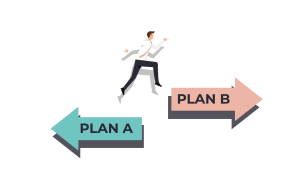
Plan B is to repeat Plan A!
Most untrained negotiators spend much of their time in preparation for their upcoming (and business critical negotiations) by planning to argue their own case, building a series of facts and arguments to sway the other side and figuring out different ways of repeating the same thing in a slightly different way. They appear also to be poor at working out what the other side wants, and what is driving those needs (beyond the obvious).
Even worse if possible is that when they get in front of the other side the take every opportunity to strongly argue their own case, and if the other side has a different opinion, they simply repeat their own even harder.
How is that working out for you?
What value does being stubborn have?
Well, it is not as cut and dry as you might think.
This weekend Tiger Woods has come back from years in the wilderness to win the US Open at Augusta for the first time since 2005. Woods has been in a ‘right mess’ as my mother would have said. His health, wealth and happiness have been under the spotlight for years and many had written him off, and now he is being tipped to beat Jack Nicklaus record of 18 majors.
Last week James Cracknell the twice Olympic Gold British rower came back at the age of 47 (after a life-threatening head injury sustained in a cycling accident whilst competing in the frankly bonkers, none stop cycle across America), to help Cambridge win the boat race.
I would say that both Woods and Cracknell have a streak of utter stubbornness about them that make mere mortals like me (and maybe you!) marvel at their feats.
However, their stubbornness is about what they want to achieve, the objectives they set themselves, not necessarily how they do it. Woods had to change his game to accommodate his fused back. Cracknell no doubt had to find ways of training his tired body back to the heights demanded of the arguably toughest aerobic sport there is.
Being stubborn about what you want to achieve may not be the problem.
Being stubborn about objectives is what we should all build into our aims but being infinitely flexible about how we achieve them is important too.
Being flexibly stubborn is not a bad idea.